Parliament of Albania Civic Education Platform
Scalable G2C Digital Infrastructure for Civic Education, Visitor Engagement and Institutional Operations
The Parliament of Albania Civic Education Platform (edukimi.parlament.al) was developed as a centralized Government-to-Citizen (G2C) digital infrastructure designed to support civic education, public engagement, and visitor participation through a single institutional system.
The platform was developed for the Parliament of Albania (Civic Education Service – SHEQ) as the institutional beneficiary and client, with financing support from NDI (National Democratic Institute). This dual institutional context required a platform that could serve public-facing civic education goals while also supporting operational reliability, documentation discipline, and long-term institutional autonomy expected in donor-financed implementation environments.
This was not a standard institutional website assignment. It required a multi-layered digital system that combines public-facing transparency and engagement with backend operational control, workflow management, data integrity, and long-term maintainability.
Spontan Agency served as the lead technical partner for digital infrastructure, systems architecture, UX/UI, and backend engineering, delivering a platform designed for institutional continuity, modular growth, and post-launch operational independence.
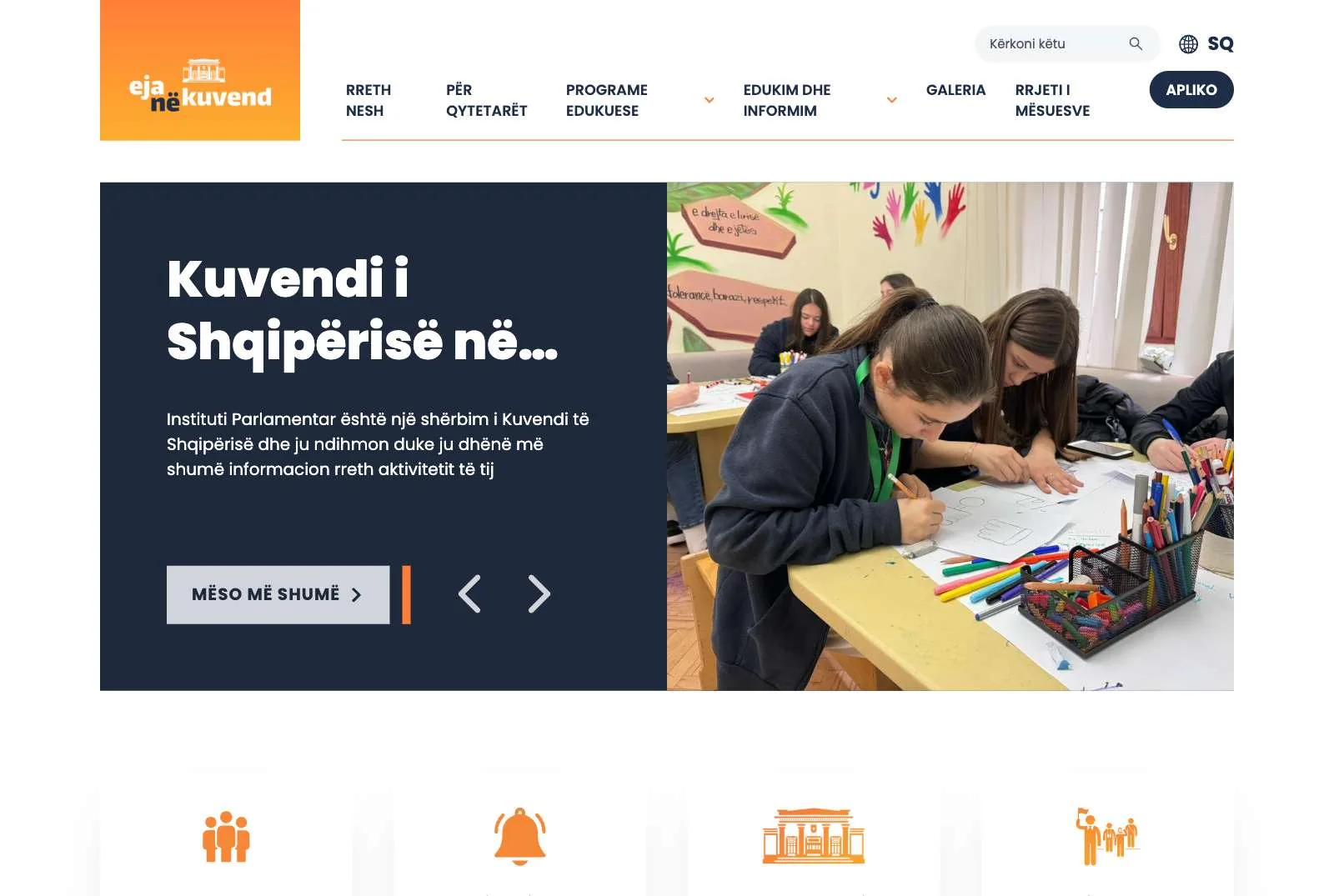
The result was a scalable G2C platform that supports the Parliament’s civic education and visitor engagement mission through a combination of:
- a structured public-facing civic education experience
- a multi-layered administrative backend for SHEQ operations
- workflow automation for visitor and participant management
- interactive civic education modules and virtual access features
- documentation-based handover and staff training for long-term institutional control
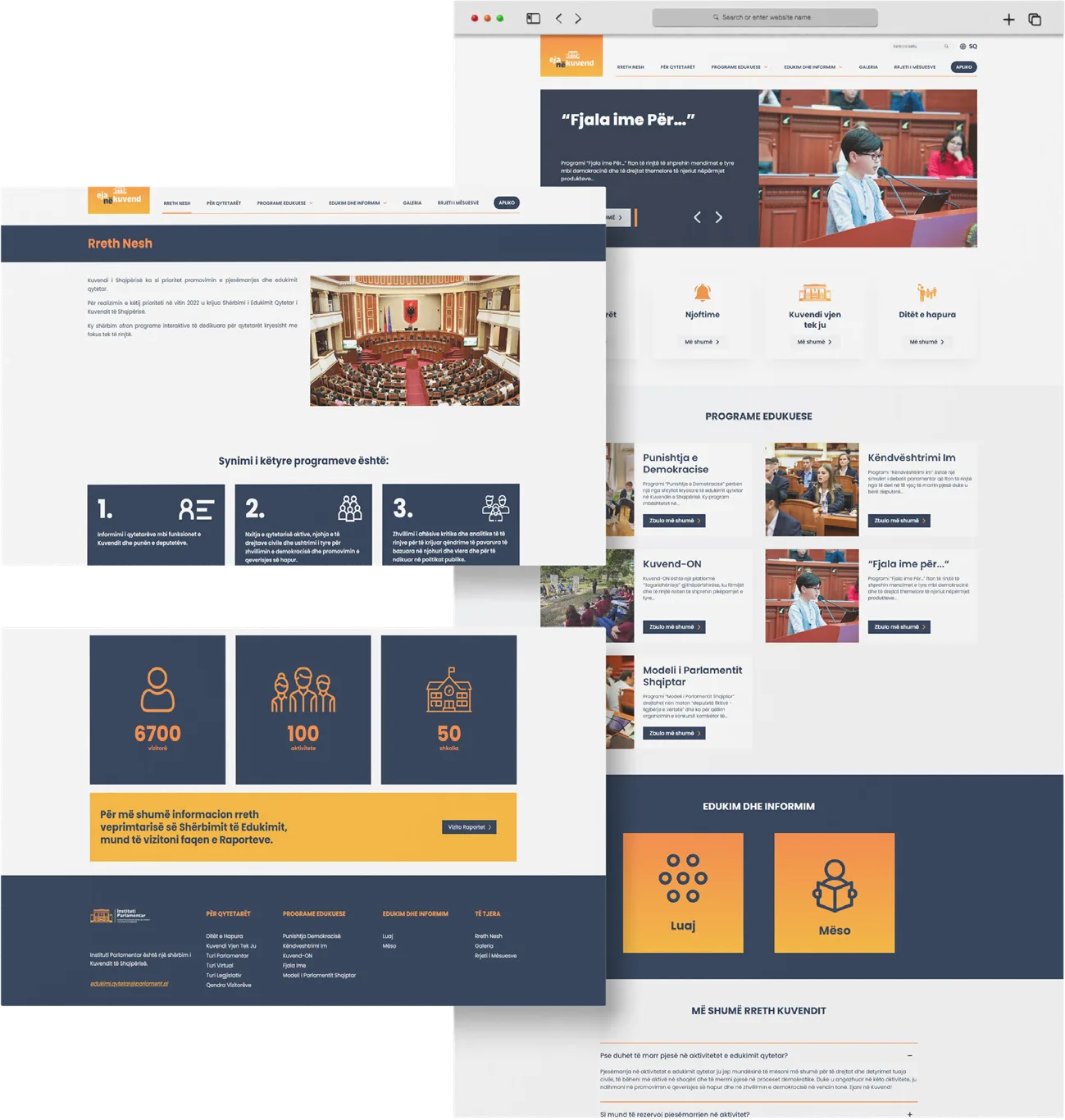
- Institutional beneficiary and client
- Parliament of Albania (Civic Education Service – SHEQ)
- Financing support
- NDI (National Democratic Institute)
- Platform name
- edukimi.parlament.al
- Platform type
- Government-to-Citizen (G2C) civic education and visitor engagement platform
- Scope
- National digital civic education, civic participation, and visitor engagement infrastructure
- Service type
- G2C platform development, institutional backend engineering, UX/UI, EdTech module integration, visitor workflow automation
- Role of Spontan
- Lead technical partner for systems architecture, UX/UI, backend engineering, and institutional digital infrastructure
- Core components
- Multi-layered management backend, automated visitor workflow engine, participant registry, interactive EdTech modules, 360° virtual environments, institutional content infrastructure
- Core deliverables
- Custom CMS, integrated participant registry, visitor management engine, virtual tour infrastructure, EdTech logic layer, technical documentation suite, administrative manuals, staff training
- Continuity priority
- Controlled administrative access, structured handover, institutional autonomy after launch
- Delivery discipline
- ISO 9001 and ISO/IEC 27001-aligned operational workflows (quality control, implementation governance, documentation discipline, structured handover)
Centralizing Civic Education and Institutional Workflows into One National Platform
The Parliament of Albania established the Civic Education Service (SHEQ) to strengthen civic education and citizen participation. The digital challenge was to build a platform capable of supporting that mission at a national level through a single institutional environment.
The challenge was not only to create a strong public interface. The platform also had to function as a dependable institutional operations system.
It needed to work simultaneously as:
- a public-facing civic education and engagement platform, and
- a controlled backend environment for recurring administrative processes handled by SHEQ
This meant the platform had to support, within one coherent system:
- interactive educational content and civic learning experiences
- participant registration workflows
- automated physical visit applications and request processing
- civic engagement tools
- institutional staff administration and operational visibility
- long-term maintainability and controlled expansion
In practical terms, the core challenge was to design a dual architecture: a citizen-facing experience that is accessible and meaningful, combined with a multi-layered backend engineered for institutional governance, continuity, and operational independence.
This is what differentiates a high-value G2C platform from a standard campaign or informational website.
From Public-Facing Experience to Institution-Managed Digital Infrastructure
Spontan solved a delivery problem that is common in public-sector digital projects and frequently underestimated:
How do you build a platform that is engaging for citizens and useful for education, while also functioning as a reliable institutional operations engine for staff who must manage real workflows every day?
Our role extended beyond front-end design and development. We closed the gap between public-facing engagement goals and institutional operational requirements.
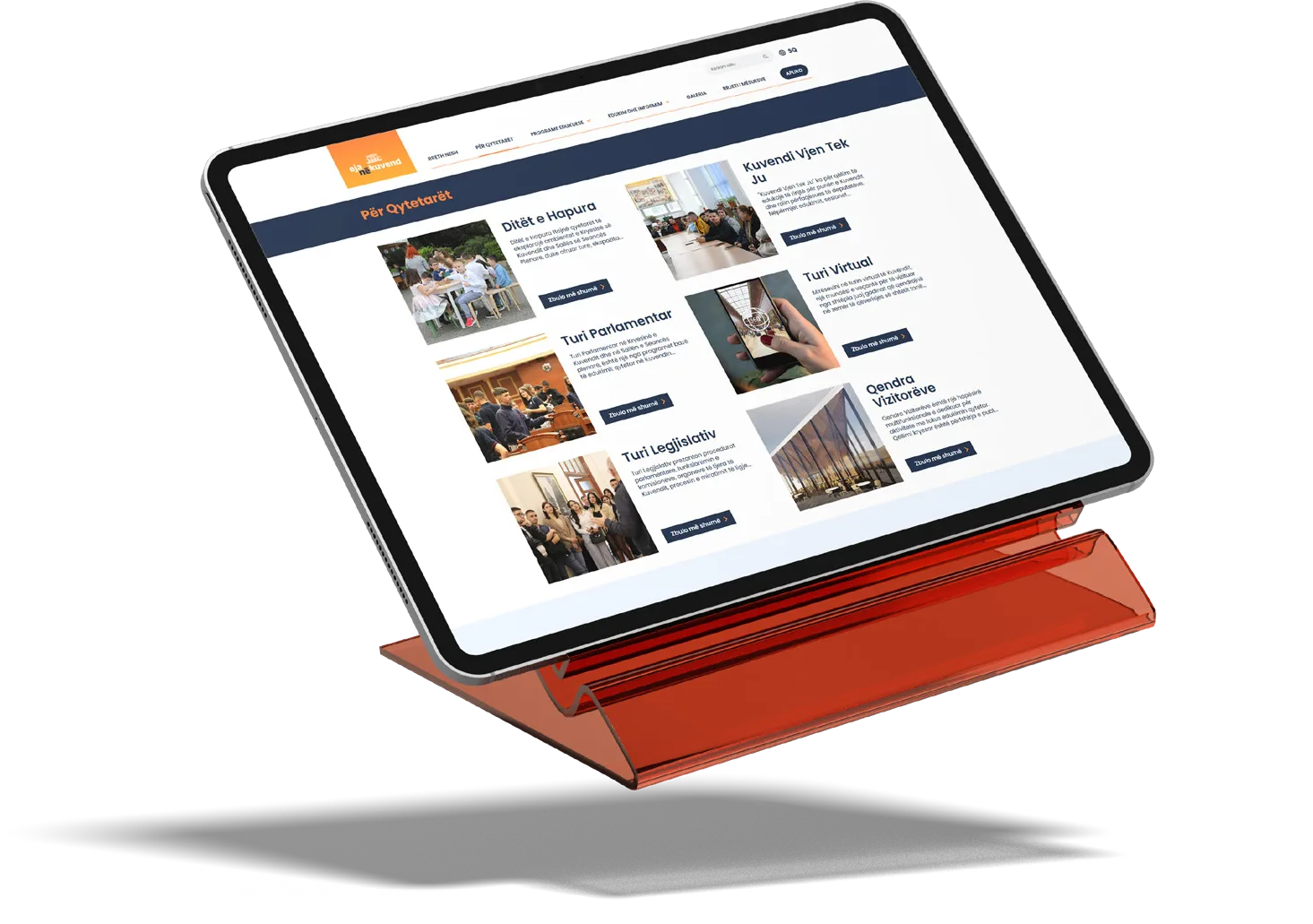
- 01
We designed a dual-system architecture (citizen experience + institutional backend)
Instead of treating the project as a front-end portal with a simple admin panel, Spontan structured the platform as a dual-purpose system:
- a civic education and engagement environment for users
- a backend operational core for SHEQ administrative workflows
This ensured the platform could create public value while remaining administratively usable and sustainable.
- 02
We engineered the backend as the operational core (not a basic CMS)
A major value layer in this project was backend engineering.
Spontan implemented a multi-layered administrative backend capable of supporting recurring institutional processes, including:
- visitor request intake and processing
- participant registry workflows
- education module administration
- content and section management
- internal operational oversight for SHEQ staff
This turned the platform into an actual institutional tool, not only a publishing interface.
- 03
We converted civic content into interactive digital learning infrastructure
Spontan integrated an EdTech logic layer and interactive modules to support civic learning in a more engaging and structured format.
This included support for:
- gamified/interactive educational experiences
- logic-driven module behavior
- civic learning pathways beyond static content pages
The result was a platform better aligned with modern civic education needs, especially for younger audiences and engagement-focused programming.
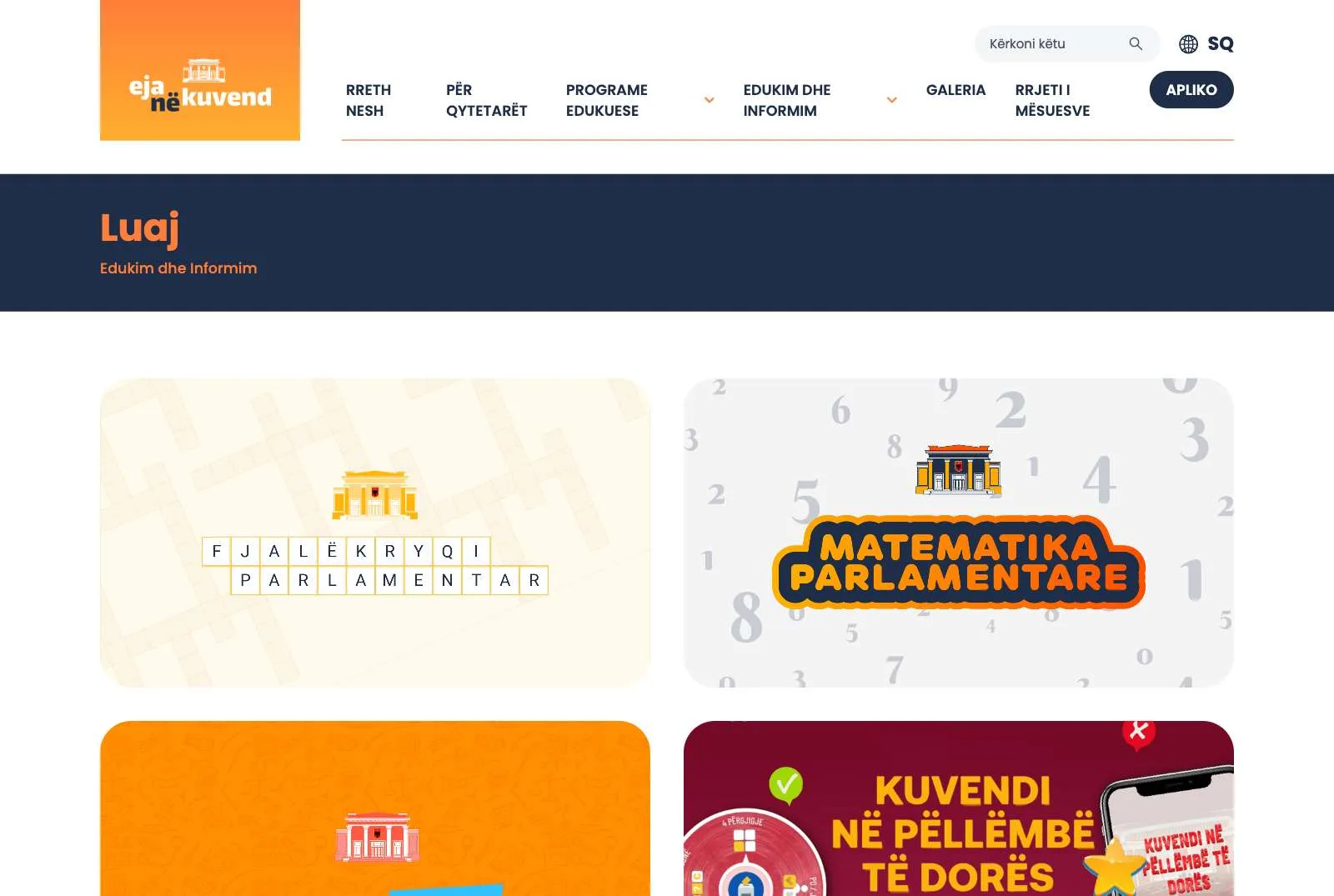
The “Luaj” (Play) section of interactive civic games - 04
We integrated visitor engagement workflows into one institutional system
Rather than keeping visitor engagement as separate manual processes, Spontan implemented a structured digital workflow engine for visit requests and related administrative handling.
This improved operational readiness for:
- Open Day applications
- group visits and tour requests
- location-linked visit flows (including parliamentary spaces and learning environments)
- recurring workflow visibility for institutional staff
This is a high-impact operational value point because it directly supports internal efficiency and continuity.
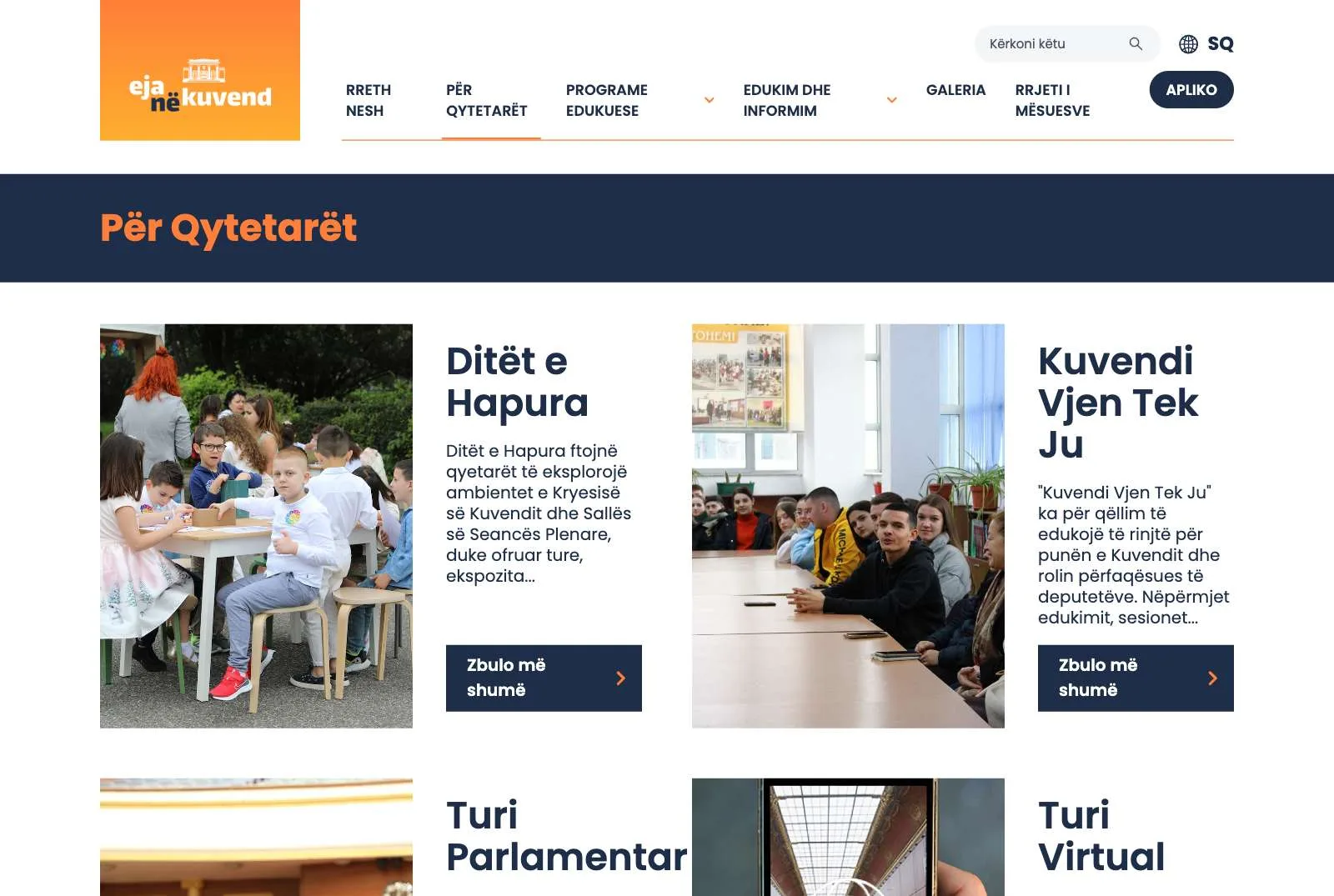
Visit programmes for citizens - 05
We built the platform for institutional ownership after launch
Spontan designed delivery and handover around post-launch autonomy, not ongoing dependency.
To support long-term SHEQ control, we delivered:
- a technical documentation suite
- administrative manuals
- in-depth staff training sessions
- structured handover logic for ongoing use and maintainability
This positioned the platform for institutional continuity and reduced vendor dependency risk.
- 06
We delivered with quality and information governance discipline
Because the platform is institution-facing, long-term, and operationally sensitive, delivery quality depended on more than feature implementation.
Spontan applied documented internal workflows aligned with ISO 9001 and ISO/IEC 27001 operational practices to support:
- implementation consistency
- review and approval discipline
- documentation quality
- asset and version control
- structured transition to institutional operations
Spontan’s core value in this project was the ability to connect five things in one delivery model:
- civic engagement UX
- institutional backend operations
- workflow automation
- documentation-based continuity
- institutional autonomy after handover
That combination is what made the platform a durable G2C infrastructure asset rather than a short-term digital product.
The live platform5
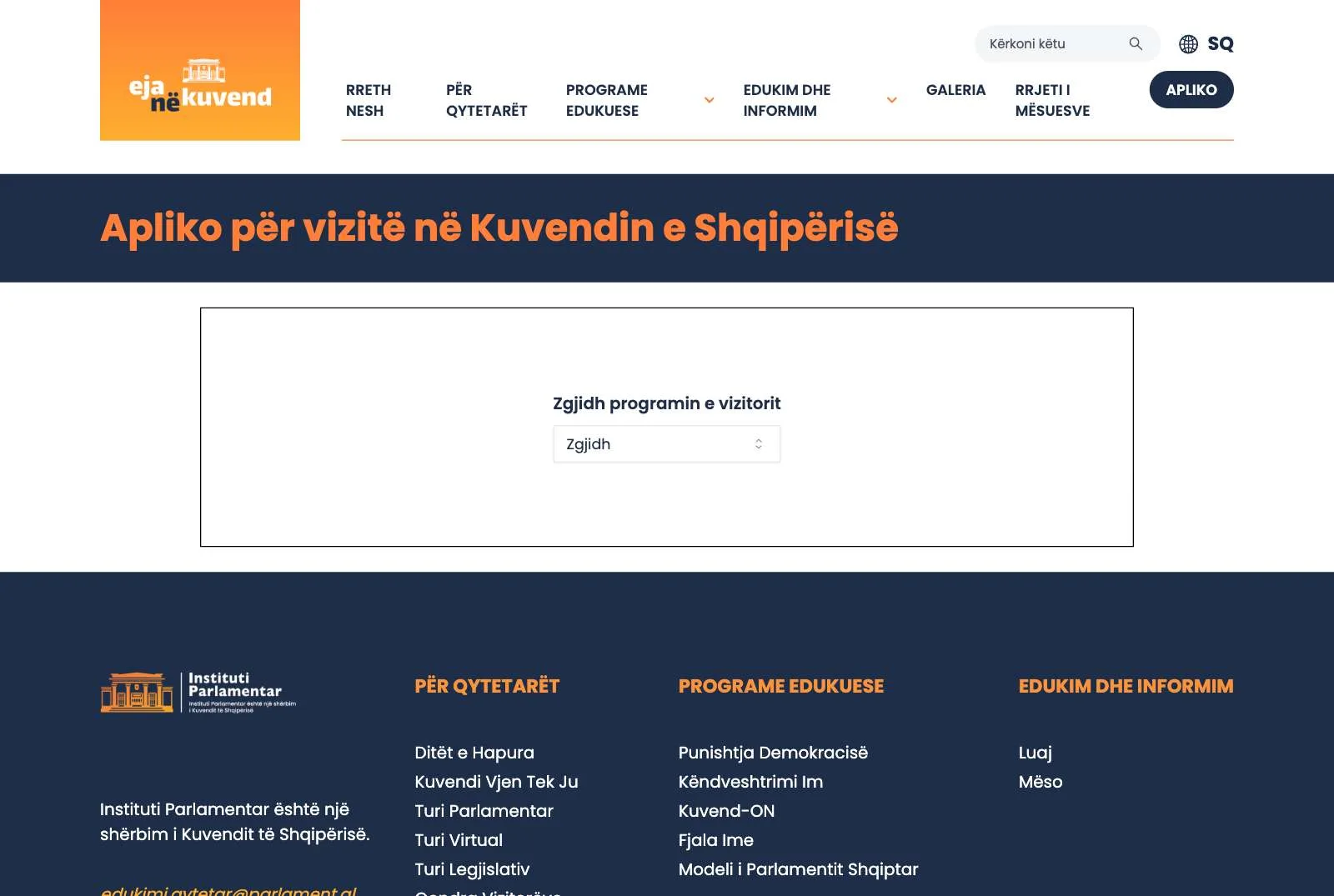
Multi-layered institutional backend for SHEQ operations
The operational core of edukimi.parlament.al is a multi-layered administrative backend engineered to manage recurring institutional workflows with controlled administrative oversight and data integrity.
Participant registry and workflow management
A centralized participant registry and workflow system was implemented to support civic education programs, competitions, and structured engagement activities.
This backend component supports:
- registration data processing
- participant workflow management
- administrative visibility for SHEQ operations
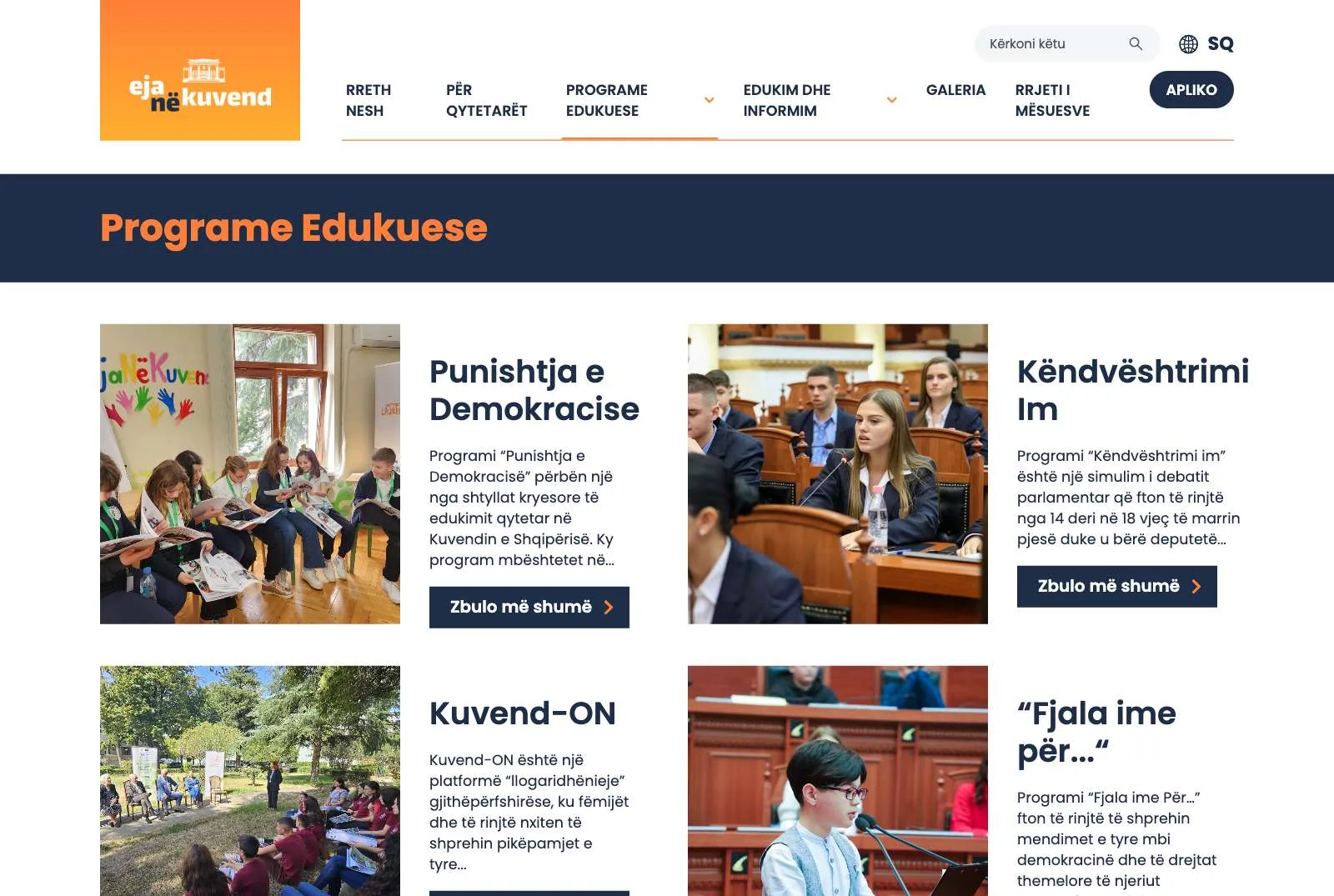
Automated visitor management system
Spontan implemented a structured workflow engine for managing physical visit requests, including flows such as:
- Open Day applications
- group tour requests
- visit workflows connected to parliamentary learning and visit environments
This component supports ongoing intake and operational processing of visitor engagement activities within one institutional system.
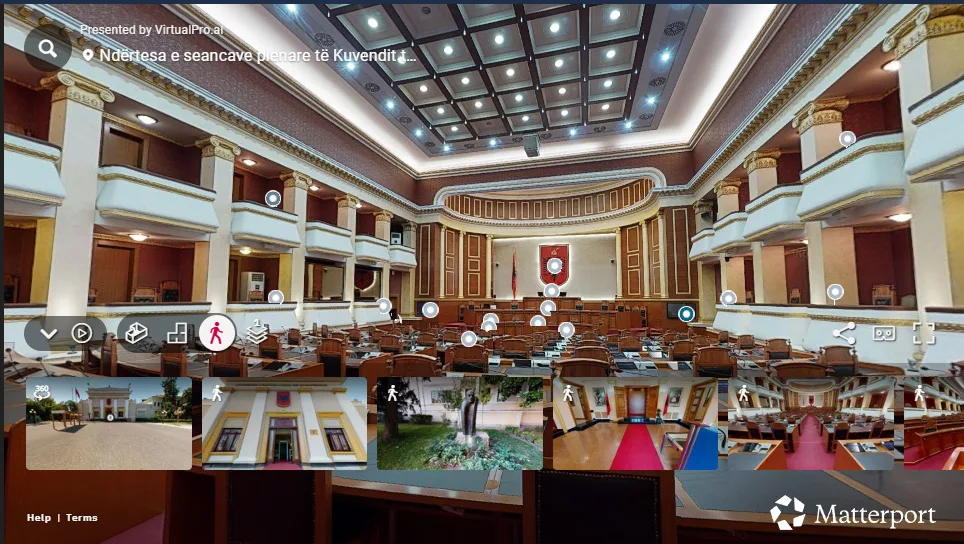
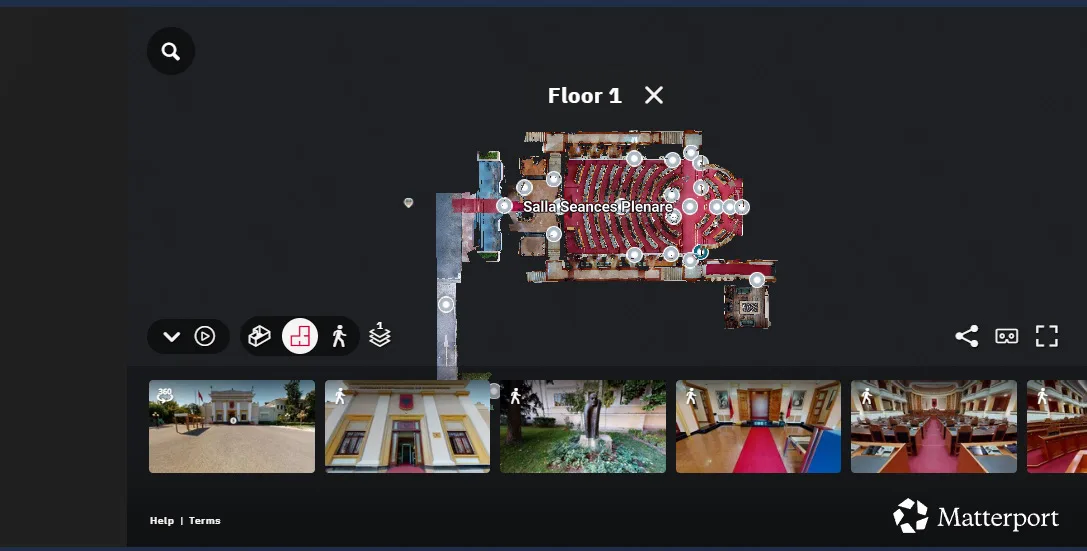
360° virtual tour infrastructure
An immersive web-accessible 360° virtual tour environment enables users to explore key parliamentary spaces digitally.
This supports:
- public transparency
- accessibility beyond physical visits
- engagement with parliamentary environments at scale
Institutional governance controls
The backend was designed with controlled administrative usage logic to support:
- data integrity
- structured internal use discipline
- modular updates by SHEQ staff
- routine administration without repeated development intervention
This is a key requirement for long-term institutional use.
EdTech logic layer and interactive module administration
A custom logic layer powers interactive civic learning experiences (including the “Luaj” / Play section and related modules) by managing:
- content delivery behavior
- logic-driven educational interactions
- module functionality and scoring logic (where applicable)
This enables the platform to function as interactive educational infrastructure, not only static content publishing.
A national institutional platform creates long-term value only if the institution can operate it confidently after delivery.
To support SHEQ’s long-term autonomy, Spontan delivered a continuity package structured around institutional ownership and operational readiness.
In-depth staff training sessions
Spontan conducted in-depth training sessions for SHEQ administrative staff to support:
- visitor management engine operation
- educational module administration
- content update workflows
- routine platform use and operational confidence
Technical documentation suite and administrative manuals
A complete documentation package was prepared to support:
- platform governance
- backend operations
- internal administrative usage
- continuity after handover
ISO-backed delivery discipline (quality + information governance)
Spontan’s ISO 9001 and ISO/IEC 27001-certified operating discipline strengthens this type of institutional handover by improving:
- documentation quality and consistency
- approval clarity
- version and asset control
- structured transition from development to institutional operations
Continuity through institutional ownership
This handover-and-training protocol was designed to ensure the Parliament maintains control over the platform’s core systems without routine external dependency.
The edukimi.parlament.al platform delivers a centralized digital infrastructure that supports the Parliament of Albania’s civic education and visitor engagement activities through a combination of public-facing experiences and institutional backend operations.
- 01
Centralized civic infrastructure
A single platform environment supporting civic education modules, engagement tools, and visitor workflows.
- 02
Operational backend capacity
A multi-layered administrative engine enabling SHEQ to manage recurring institutional processes internally.
- 03
Public transparency and access
360° virtual environments and interactive modules expanded access to parliamentary spaces and civic learning experiences.
- 04
Institutional continuity and operational autonomy
Documentation and staff training supported long-term control after handover.
- 05
Scalable architecture for growth
The system was designed to support continued expansion of civic education programming and digital participation initiatives.
- 06
Quality- and security-oriented delivery discipline
ISO 9001 and ISO/IEC 27001-aligned workflows reinforced implementation control, documentation quality, and reliable transition to institutional use.
The following implementation elements were delivered as part of the project scope:
- one centralized bilingual G2C platform for civic education and visitor engagement (EN / AL)
- 1 multi-layered administrative backend for SHEQ operations
- 1 automated visitor management workflow engine
- 1 participant registry and workflow management system
- 1 EdTech logic layer with interactive civic learning module integration
- 360° virtual tour infrastructure for parliamentary spaces
- 1 custom CMS / structured content management environment
- administrative governance controls and access structuring
- technical documentation suite + administrative manuals
- in-depth SHEQ staff training sessions for continuity and handover
What makes this more than a standard government website project?
This project combines a public-facing civic education experience with a multi-layered backend operational system for visitor management, participant workflows, and institutional administration. It functions as digital infrastructure, not only a publishing website.
Why is backend engineering a major value point in this case study?
Because the platform supports recurring institutional processes, backend reliability and administrative usability are critical. A strong backend enables SHEQ to manage workflows internally and maintain continuity after handover.
Why do documentation and training matter in public-sector digital projects?
Public institutions need long-term control over their systems. Documentation, administrative manuals, and staff training reduce vendor dependency and support institutional autonomy after delivery.
Why is NDI financing relevant in this case study?
NDI’s financing role adds context to the delivery environment. It reflects a donor-financed / institution-owned implementation model, where quality control, documentation discipline, and handover readiness are especially important.
Can Spontan deliver similar G2C platforms for public institutions and donor-funded programs?
Yes. This case study demonstrates Spontan’s delivery model for institutional platforms that require a combination of citizen-facing UX, backend workflow systems, operational continuity, and structured handover.
The Parliament of Albania Civic Education Platform demonstrates Spontan Agency’s ability to deliver high-value Government-to-Citizen (G2C) digital infrastructure where success depends on far more than front-end execution.
In this assignment, Spontan helped transform a national civic education and visitor engagement mandate into a scalable, institution-managed digital platform that combines public access, operational workflows, and long-term maintainability.
Our contribution combined:
- institutional systems architecture
- backend workflow engineering
- civic education UX/UI and interactive module integration
- visitor workflow automation
- documentation-based handover and continuity planning
- administrative training for post-launch autonomy
- quality- and security-disciplined delivery practices (ISO 9001 / ISO/IEC 27001-aligned)
The result is a platform designed not only to launch successfully, but to remain usable, governable, and scalable over time.
This case reflects the level of execution required for public sector, donor-funded, and multi-stakeholder digital initiatives where institutional continuity, operational control, and long-term public value are as important as the build itself.